
Monocalcium phosphate (MCP) is an essential compound in multiple industries. It provides vital calcium and phosphorus for biological functions.
In food, it acts as a leavening agent, while in animal feed, it supports growth. In fertilizers, MCP boosts plant development by supplying crucial nutrients.
In this article, you'll learn about MCP's uses, its forms, and its importance across sectors.
Monocalcium phosphate (MCP) is an inorganic compound with the chemical formula Ca(H2PO4)2. It is a white, odorless, crystalline powder or granules. The two primary forms of MCP are:
● Monohydrate (MCP-M): This form contains one water molecule (Ca(H2PO4)2·H2O). It is the more commonly used form in food production and animal feed because it is easy to handle and stable under normal conditions.
● Anhydrous MCP (MCP-A): This form lacks water and is typically used in industrial and agricultural applications, including fertilizers. It is more concentrated and can be used in higher doses.
Both calcium and phosphorus are vital for life, and MCP provides a valuable source of both.
● Calcium is crucial for bone health, nerve function, and muscle contraction. It is also involved in enzymatic activities and the release of hormones.
● Phosphorus is essential for DNA synthesis, energy transfer (in the form of ATP), and bone formation.
Together, these minerals make MCP a critical component in both human and animal nutrition.
Monocalcium phosphate is typically produced by reacting calcium hydroxide (Ca(OH)2) with phosphoric acid (H3PO4). The reaction is carefully controlled to ensure high purity and yield of MCP.
In this process, calcium hydroxide (or sometimes calcium carbonate) reacts with phosphoric acid to form monocalcium phosphate and water. The resulting MCP is then purified and dried to ensure it meets food-grade or industrial standards, depending on its intended use.
For food-grade MCP, further steps are taken to eliminate impurities, ensuring that it is safe for consumption. High-quality monocalcium phosphate is necessary for maintaining the safety and efficacy of food and animal feed products.
Monocalcium phosphate is highly versatile, finding applications across several industries. Below are the major areas where it is commonly used:
● Leavening Agent in Baking
Monocalcium phosphate is widely used as a leavening agent in baking products. When mixed with baking soda (sodium bicarbonate), it reacts to release carbon dioxide gas, which causes the dough or batter to rise. This reaction is essential in creating light, fluffy textures in baked goods such as cakes, muffins, pancakes, and cookies.
MCP is often used in double-acting baking powders, where it provides an immediate leavening effect by releasing CO2 when moisture is added. This quick reaction helps baked goods rise during mixing, ensuring that they achieve the desired texture.
● Dough Conditioner
In addition to being a leavening agent, MCP also acts as a dough conditioner. It helps improve the texture and structure of dough, ensuring better consistency and handling. This makes it particularly useful in the production of bread, where it helps enhance the final product's softness and volume.
● pH Control Agent
MCP can also be used as a pH control agent in certain food products. By maintaining the desired acidity, MCP ensures that food products, like processed meats and dairy, retain their quality and stability. It can also be used in salad dressings and sauces to prevent separation and maintain texture.
Monocalcium phosphate is a critical source of calcium and phosphorus in animal feed. These minerals are essential for various physiological processes in livestock, poultry, and pets.
● Bone Health and Growth
Calcium and phosphorus play a pivotal role in bone health and development. In animals, especially poultry and swine, MCP helps strengthen bones, improve skeletal structure, and enhance overall growth. It is commonly added to feed formulations for animals during rapid growth phases, such as in piglets and young poultry.
● Eggshell Quality and Milk Production
For dairy cows, MCP boosts milk production by providing calcium and phosphorus, which are vital for maintaining bone health and supporting milk synthesis. Similarly, in poultry, MCP improves eggshell quality, helping to ensure that eggs are strong and resilient.
Animal Type |
Key Benefits |
Application |
Poultry |
Bone health, eggshell quality |
Feed for chickens and ducks |
Swine |
Bone development, weight gain |
Feed for piglets and sows |
Cattle |
Supports milk production, reproductive health |
Dairy cows and beef cattle |
Aquaculture |
Promotes bone and shell development |
Fish and shrimp feed |
● Phosphorus Fertilizer
Monocalcium phosphate is also a valuable source of phosphorus in fertilizers. Phosphorus is essential for plant growth, particularly in promoting strong root development, flower formation, and fruit ripening. As a component in fertilizers, MCP helps plants absorb nutrients efficiently, resulting in improved crop yields.
● Water-Soluble Fertilizers
Due to its solubility in water, MCP is used in water-soluble fertilizers, which are quickly absorbed by plants. These fertilizers help address phosphorus deficiencies in soils and enhance crop productivity, especially in nutrient-deficient environments.
● Pharmaceuticals
Monocalcium phosphate is used in some pharmaceutical formulations as a source of calcium and phosphorus. It is included in calcium supplements and other dietary formulations that aim to support bone health and overall metabolic functions.
● Water Treatment and Industrial Applications
MCP is also used in water treatment processes. It helps reduce corrosion in water pipes by forming a protective phosphate layer, thus improving the durability of pipes and preventing the degradation of water distribution systems.
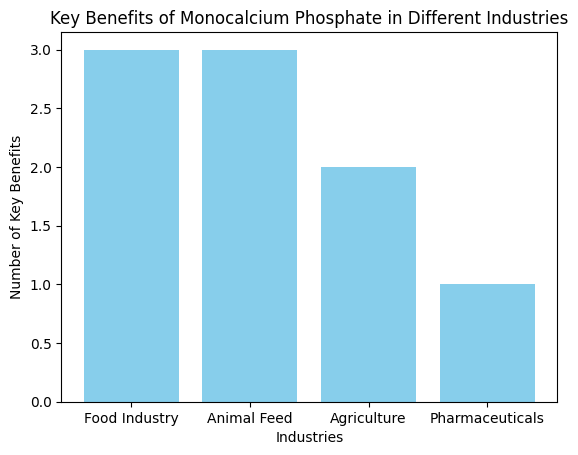
Monocalcium phosphate is classified as Generally Recognized as Safe (GRAS) by regulatory authorities like the U.S. Food and Drug Administration (FDA). It has been thoroughly evaluated for safety, ensuring that it poses no risk when consumed in regulated amounts.
In addition to the FDA, global regulatory bodies such as the European Food Safety Authority (EFSA) have confirmed that MCP is safe for consumption and use in food production. It is included in the list of approved food additives under E341(i) in the European Union.
Similarly, when used in animal feed or fertilizers, monocalcium phosphate has been deemed safe, provided it is used according to guidelines set by authorities like the European Food Safety Authority (EFSA) and FDA.
Regulatory Body |
Safety Status |
Notes |
FDA (U.S.) |
Generally Recognized as Safe (GRAS) |
Safe for use in food products and additives |
EFSA (EU) |
Approved for use in food |
Subject to intake limits for phosphorus |
JECFA (FAO/WHO) |
Safe when used properly |
No toxicity concerns at regulated levels |
The combination of calcium and phosphorus in MCP makes it an essential nutrient source for both humans and animals. These minerals are crucial for maintaining strong bones, supporting metabolic functions, and aiding in energy transfer in cells.
While MCP is generally safe, excessive intake of phosphorus, especially in relation to calcium, may pose health risks. For example, excessive phosphorus consumption can lead to kidney problems and may interfere with calcium absorption, potentially affecting bone health.
It's important to consume products containing MCP in moderation to avoid these health risks.
The body requires a balanced intake of calcium and phosphorus. MCP helps meet these nutritional needs, but the overall diet must provide the right amounts of both minerals. The recommended daily intake for phosphorus is about 700 mg for adults, with calcium being about 1,000 mg.
Monocalcium phosphate is a versatile compound used in food, animal feed, agriculture, and pharmaceuticals. Its calcium and phosphorus content, combined with its role as a leavening agent in baking, makes it essential in various industries. When used properly, it supports human and animal health, boosts agricultural productivity, and enhances food quality.
Aurora Industry Co., Ltd. provides high-quality monocalcium phosphate, offering reliable solutions for various industrial applications. Their products meet safety and quality standards, ensuring value across multiple sectors.
A: Monocalcium phosphate (MCP) is an inorganic compound made of calcium and phosphorus. It's commonly used as a leavening agent in food, a nutrient source in animal feed, and a fertilizer ingredient.
A: In baking, monocalcium phosphate reacts with baking soda to release carbon dioxide, helping dough rise and creating light, fluffy textures in baked goods.
A: Monocalcium phosphate provides essential calcium and phosphorus to animals, supporting bone health and promoting growth, especially in poultry and livestock.
A: Monocalcium phosphate is available in two main forms: monohydrate (MCP-M), which includes water, and anhydrous (MCP-A), which lacks water and is more concentrated.
A: Yes, monocalcium phosphate is recognized as safe (GRAS) by regulatory authorities like the FDA when used within recommended limits in food production.


