Introduction
Monocalcium phosphate (MCP) is a common food additive used in baking and food production. It helps dough rise and maintains product stability. But does MCP contain dairy? This question is essential for those on dairy-free or vegan diets. In this article, we will clarify whether MCP contains dairy and what it means for consumers with dietary restrictions.
What is Monocalcium Phosphate?
Monocalcium phosphate is a white, crystalline powder composed of calcium, phosphorus, and oxygen. It is mainly used in food processing as a leavening agent, acidulant, and dough conditioner. Chemically, it is represented as Ca(H₂PO₄)₂, and its main purpose in food is to assist in the rise of baked goods by reacting with baking soda to release carbon dioxide. This reaction creates air pockets in the dough, contributing to the light, fluffy texture of products like cakes, muffins, and bread.
Additionally, MCP helps in maintaining the pH balance in various processed foods, stabilizing their texture and flavor.
Is Monocalcium Phosphate Derived from Dairy?
One of the key concerns for individuals with dairy allergies or those following a vegan lifestyle is whether MCP contains dairy or dairy derivatives. The truth is that while MCP can be sourced from animal-based products, it is not inherently a dairy product.
Animal-Based Sources of MCP
In some instances, MCP can be produced using animal-derived sources, such as bones or dairy-based calcium. These sources provide a natural and readily available source of calcium, which is necessary for the production of MCP. However, it’s important to note that this is not always the case, and not all MCP is derived from animal sources.
Plant-Based Sources of MCP
On the other hand, MCP can also be derived from plant-based sources, such as mineral rocks (e.g., phosphate rock) and certain phosphoric acids. This makes MCP a viable option for those following vegan or dairy-free diets, as plant-derived MCP does not contain any dairy ingredients. It’s essential to check with manufacturers regarding the specific source of MCP used in their products to ensure it aligns with your dietary preferences.
Source Type | Dairy-Free | Animal-Derived | Notes |
Plant-Based | Yes | No | Typically derived from mineral sources. |
Animal-Based | No | Yes | Derived from animal bones or dairy products. |
Synthetic | Yes | No | Produced through chemical processes, not involving dairy. |
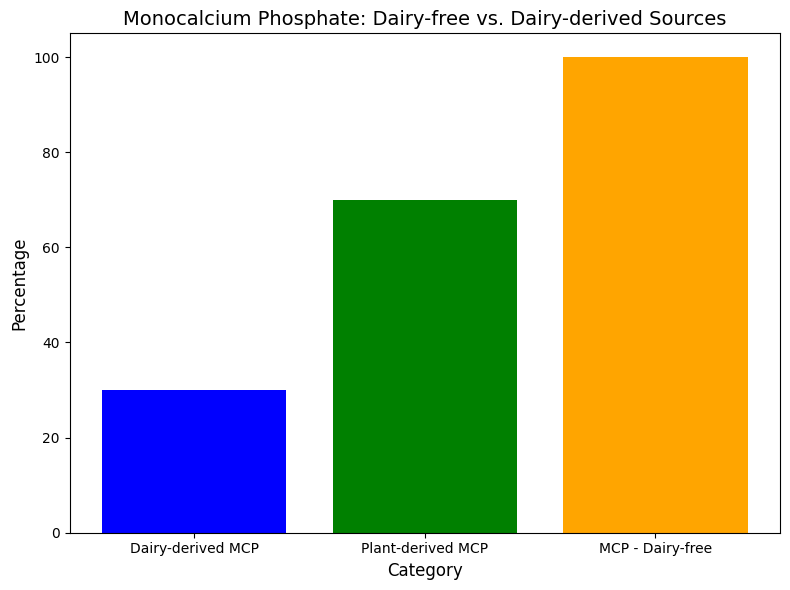
Monocalcium Phosphate and Dairy-Free Diets
For individuals with dairy allergies or intolerances, the safety of monocalcium phosphate is an important consideration. When derived from non-dairy sources, MCP can be considered dairy-free. However, as mentioned, the production process can vary, so it's always crucial to verify whether the MCP used in a particular product is derived from plant-based sources.
Why Is MCP Considered Dairy-Free?
MCP itself does not contain any milk or dairy products unless it has been produced using dairy-based calcium. The compound is chemically distinct from dairy ingredients, making it a suitable option for people following a dairy-free diet, as long as the source is confirmed to be plant-derived.
Checking Product Labels for Dairy Content
Even though MCP is typically dairy-free, consumers should always read the ingredient labels carefully. If you are sensitive to even trace amounts of dairy, it's important to look out for any cross-contamination or hidden dairy derivatives in processed foods. Many manufacturers label products containing dairy, so it's always good practice to double-check.
Food Category | Role of Monocalcium Phosphate |
Baked Goods | Leavening agent, improving texture and volume |
Dairy Alternatives | Fortifying calcium and phosphorus content |
Processed Foods | Stabilizer and acidulant for consistency |
Nutritional Supplements | Source of calcium and phosphorus |
Animal Feed | Provides necessary minerals for animal growth |
Health Implications of Monocalcium Phosphate for Dairy-Free Consumers
Monocalcium phosphate can contribute to the nutritional profile of foods, particularly by providing calcium, an essential mineral for bone health. While MCP isn't a major source of calcium compared to dairy products, it can still provide a small amount of this vital nutrient in non-dairy products.
Potential Health Benefits
For dairy-free consumers, MCP can serve as an alternative calcium source in food products. Calcium plays an important role in supporting bone density, muscle function, and nerve transmission. By fortifying foods with MCP, manufacturers provide a convenient means to help consumers meet their daily calcium needs without relying on dairy products.
Concerns for Individuals with Severe Dairy Allergies
Though MCP itself is generally safe for dairy-free consumers, it's important to be aware of the potential risks of cross-contamination during the production process. In cases where MCP is produced in facilities that handle dairy or if animal-based calcium is used, there may be trace amounts of dairy present in the final product. It’s always best for consumers with severe allergies to consult with the manufacturer or avoid the product altogether if there is any doubt.
Regulatory Guidelines and Safety
Monocalcium phosphate is generally recognized as safe (GRAS) by major regulatory bodies, such as the FDA and the EFSA, when used within the established limits. This safety status ensures that MCP can be consumed safely in food products and is regulated to ensure there is no harm to consumers.
Safe for Dairy-Free Consumption
When it comes to dairy-free diets, MCP is typically considered safe as long as it is confirmed to be plant-derived. Regulatory bodies have not flagged MCP as a risk for dairy-free individuals, and it is not classified as a dairy ingredient in food labeling.
Global Regulatory Differences
While the safety of MCP is globally acknowledged, it’s important to note that regulations regarding food additives may vary between countries. For instance, the use of certain additives may be more tightly regulated in the EU compared to the US. It’s always wise to check the specific food safety guidelines of the region in which you reside.
Region | Regulatory Body | Dairy-Free Status | Notes |
United States | FDA | Generally Recognized as Safe (GRAS) | MCP is dairy-free when sourced from plant-based or synthetic ingredients. |
European Union | EFSA | Approved as Dairy-Free | Only certain forms of MCP are allowed in organic foods. |
Australia/New Zealand | FSANZ | Dairy-Free | MCP must be clearly labeled if sourced from animal ingredients. |
Alternative Sources of Monocalcium Phosphate
For individuals who are particularly cautious about dairy contamination, there are alternative sources of MCP that do not involve animal-derived ingredients. Many manufacturers today are turning to plant-based sources for MCP production, ensuring that their products meet the growing demand for dairy-free and vegan-friendly options.
Vegan and Plant-Based Alternatives
Plant-based alternatives to MCP include other leavening agents such as baking soda, potassium bicarbonate, or ammonium bicarbonate. These ingredients can provide similar leavening effects without the need for calcium sources that might involve dairy. Additionally, calcium from plant-based sources like seaweed or fortified non-dairy milks can also help meet the nutritional needs of dairy-free consumers.
Other Non-Dairy Leavening Agents
If you're looking for dairy-free baking options, many other leavening agents can work in place of MCP. These alternatives often come with their own unique properties, such as activated yeast for rising dough or cream of tartar to help stabilize whipped cream and egg whites.
Conclusion
In summary, monocalcium phosphate (MCP) does not inherently contain dairy. While some MCP may be derived from animal-based sources, plant-based alternatives make MCP safe for dairy-free diets. Always verify product labels to ensure dairy-free status, especially for severe allergies. For dairy-free consumers, MCP provides a reliable and safe ingredient for baked goods and dairy alternatives. Aurora Industry Co., Ltd. offers high-quality MCP to meet dietary needs without compromising on performance.
FAQ
Q: Does monocalcium phosphate contain dairy?
A: Monocalcium phosphate (MCP) does not inherently contain dairy. It may be derived from either plant or animal sources, so it's important to check the label for clarification.
Q: Can I consume monocalcium phosphate if I’m allergic to dairy?
A: MCP is typically dairy-free when sourced from plant-based ingredients. However, always verify the label to ensure it is free from any dairy contamination.
Q: Is monocalcium phosphate vegan-friendly?
A: While some MCP may come from animal sources, plant-based alternatives are available, making MCP potentially vegan-friendly. Always check the source to be sure.
Q: How is monocalcium phosphate produced?
A: Monocalcium phosphate is produced through a chemical reaction between calcium hydroxide and phosphoric acid. This process does not typically involve dairy.
Q: Does monocalcium phosphate contain lactose?
A: No, monocalcium phosphate does not contain lactose. It's safe for people with lactose intolerance, but be sure to confirm its source.
Q: What are the uses of monocalcium phosphate in food?
A: MCP is commonly used as a leavening agent in baked goods, helping dough rise. It's also used in other processed foods as a stabilizer and acidulant.
Q: How can I know if a product containing monocalcium phosphate is dairy-free?
A: To ensure MCP is dairy-free, always check the product label or inquire with the manufacturer about the source of the MCP used.


